Plant growth regulators were originally created for plant uniformity among landscapes. Yes these are chemicals produced for landscapers and not for commercial agriculture, i.e. not something that should be consumed by humans. Some PGRs used for cannabis are also banned from fruit and vegetable cultivation by the USDA, then how is it used with cannabis you might ask, well the USDA is a federal agency and cannabis is federally illegal.
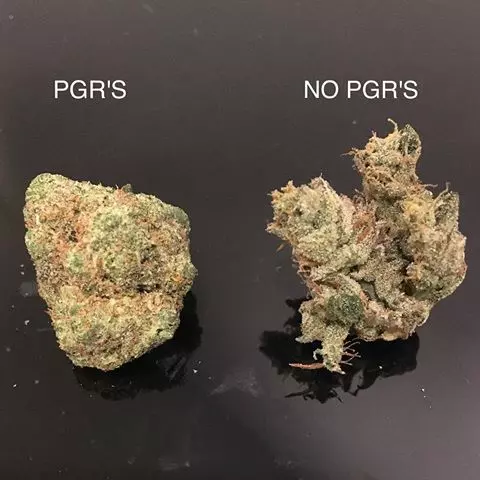
In looking at the picture that accompanies this blog it may scare you to know that you might have been smoking cannabis with PGRs in them, and if you smoke cannabis bought exclusively from dispensaries you may have only smoked PGR cannabis.
Obvious ways of identifying PRGs with your bud are:
PGR cannabis has harder, denser, and heavier buds.
PGR cannabis leaves contain fewer crystals than natural cannabis leaves.
PGR cannabis may feel wet or spongy, while natural cannabis has a drier texture.
It will take decades to truly understand the debilitating effects that PGRs will have on human beings. Similar to other poisons approved by the FDA like alcohol and tobacco, consumers are typically able to use products with little short term adverse effects initially. It isn’t until years of substance abuse that debilitating diseases are identified, and usually by then it is too late.
As someone that has lost family members to the use of alcohol and tobacco it is beyond infuriating as to the stance our corrupt government on what they will allow and won’t allow, i.e. federal cannabis prohibition.
According to a leafwell article synthetic PGRs are believed to potentially cause cancer and have an adverse affect on human fertility. The most common PRGs used in commercial cannabis grows are:
Chlormequat Chloride, this chemical encourages flowering and makes plant sizes more uniform and consistent. Chlormequat chloride may not be as carcinogenic as other synthetic plant growth regulators but may cause harm to the skin and eyes if contact is made.
Daminozide, also called Alar, the Environmental Protection Agency (EPA) classified daminozide as a probable carcinogen. Once used as a spray for fruits, vegetables, and other food crops, daminozide may no longer be used for this purpose.
Paclobutrazol may be the most toxic of these three common chemicals, especially when smoked. Smoking buds containing paclobutrazol activate a chemical change that transforms the compound into nitrosamines, and research has implicated nitrosamines in developing severe illnesses. Notably, nitrosamines are a highly carcinogenic compound in tobacco (cigarette) smoke.
The best judge of whether or not your cannabis contains synthetic PGRs is your own body. I mentioned in an earlier blog that when I smoke pretty much any cannabis that isn’t my own it usually has a pretty adverse effect on my body. Now I don’t know if that is entirely from PGRs or if it is a combination of PRGs, pesticides, mold, and a myriad of other harmful processes I have experienced first hand while working in commercial grows in Colorado.
So how can you be sure that your cannabis doesn’t contain PGRs? You guessed it grow your own, and never look back.